Pages

Showing posts with label self-help books. Show all posts

Monday, 29 June 2015

WRAP-UP: Can books really fix everything?

Over the last four weeks, I've read more self-help books than I've ever read before in my life. This is the final installment - and the wrap-up - to my investigation. How do I feel reaching the end of this personal challenge?

It's such a relief for this to finally be over! The books I've read have ranged from the god-awful to the mildly helpful, but have definitely leaned towards the former. 
So what self-help books did I read in this final week? Well, I'm embarrassed to say that I actually only managed to read one of them - namely '7 Secrets To Confidence' by Steve Miller. Surprisingly, this is the best of the self-help books that I've read; Steve's voice is very humorous, making the best of terrible situations and honestly recalling multiple times in his life that have been trying and difficult. Any self-help book that can talk about bullies as "little dicks" is friendly and approachable enough for me to actually try and take some of the advice on board.
Don't get me wrong, it's not a perfect self-help book. Each of the secrets are demonstrated in real-life situations, which definitely makes them feel trustworthy. However, they're recalled by the author rather than testimonials from his customers vouching for the secrets, so at points it definitely feels as though it could be crafted or over-exaggerated. 
As well as this, there are lots of scripts for relaxation exercises that just didn't see to have any affect on me - this could be because I didn't read the scripts out loud, or didn't have a friend read them to me, but they just seemed a bit too cliched to be genuine. They didn't really take away from my enjoyment of the book, just meant that I skipped a few of them later on as I felt I'd already read them before - they were all based off of the same formatting. 
However, I'm definitely feeling more positive about self-help books than I was at the beginning of this month long challenge. None of the ones I've read so far have been life-changing or mind-blowing, but I've been interested in the psychology behind them and I've definitely picked up a few hints and tips that I will attempt to utilize in the future. 
I definitely wouldn't say that self-help books have fixed everything for me. In fact, I'd say that self-help books made me feel worse more than they made me feel better! But because I'm still interested in the genre, I'm going to keep reading them (only posting the reviews on my Goodreads from now on though!) and hopefully I'll find the self-help book for me. In the mean time, I'm going to continue having fun with my friends and going on long relaxing walks - socialising and exercising seem to fix things a lot better than words can. 
I hope you've enjoyed my investigation into self-help books! If there are any you recommend feel welcome to comment them down below and I'll try to get around to reading them. Thank you for following me on this personal journey, even if my viewpoint didn't move as much as I'd been anticipating it would.  

Monday, 22 June 2015

INVESTIGATION: Can books really fix everything? END OF WEEK THREE.

I'm sorry about this update being a little bit late - life is getting super busy at the moment, so I haven't had a chance to make this post! Hopefully things will start calming down again soon and I'll be able to write the conclusion to this investigation on time next week.
I managed to read a couple of self-help books this week, even if I haven't managed to find time to write about them.


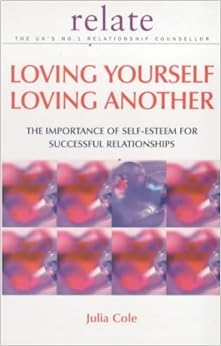
First off, I read 'Loving Yourself, Loving Another' by Julia Cole, and I really didn't get along with this one. It talks a lot about couple esteem, and how one person having a downer of a day can really put a dampener on their partners mood, and that just made me feel sad - everyone is going to have at least one bad day in a while, so why put even more stress on yourself by linking your bad day to someone else's happiness?
Similarly, I didn't get on with the questionnaires section of this book. While attempting to establish which area of self-esteem that the reader may need assistance in (either emotiona, physical or mental) you had to go through a series of questionnaires, the recommended completion times of which were thirty to forty minutes. I didn't fill out the questionnaires, but I had a good hard think about each of the options, and I just found that they didn't really access any deeper levels. The questions would be paired (e.g. 'I regard myself as an introvert' followed by 'I regard myself as an extrovert') but because the rating system was from strongly agree to strongly disagree it meant that the answer to the second question was the exact opposite of the first, which was completely pointless. Furthermore, there was no column for not applicable, which - when referring to how you believe your disabilities impacted you in your day to day life - could have come in handy, as the questions did not apply to me in the slightest.
The theory behind the book is good: teach you about general self-esteem, then the specific areas of individual self-esteem, then couple-esteem. But despite the fact that the theory was good, the execution was dreary, boring, and, quite frankly, predictable.


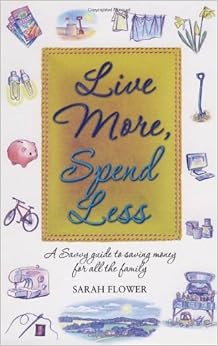
Secondly, I picked up 'Live More, Spend Less' by Sarah Flower.
"Wait," you ask. "A self-help book on money?"
Why yes, loyal reader, a self-help book on money! Going off of advice from a colleague last week, in which she told me that when she feels anxious she finds that reading money advice calms her down, I decided to take a punt and give it a shot. If I'm going to do this investigation, I might as well make it as wild and wacky as I possibly can!
The funny thing is, I completely agree with her. Whereas the other self-help books just seemed to contradict themselves with every piece of advice, trying to tear the reader in two as they attempted to embody such double standards, money books make a hell of a lot more sense. I'm not a big spender - I am quite good at saving and only buying things when I need to, but the level-headed advice offered within these pages can easily be extrapolated for use in the real world, which is a big change from the other books I've attempted over these last three weeks.
An example of this is the inclusion of a section on cheap and healthy recipes. By offering cheap recipes, it effectively caters to the money savers of the world, but by giving cheap and healthy options, this book could also help boost readers self-esteem - a change of diet is one of the easiest ways to change your mentality.
I highly recommend this book, and I'm definitely going to try to squeeze in some more money books over the next week, just to see if this trend continues.

Because this update is so late, and I've had no chance to read any self-help books over the last couple of days, the concluding post to this investigation is actually going to be posted on the 29th of June, so keep an eye out!

Thursday, 11 June 2015

INVESTIGATION: Can books really fix everything? END OF WEEK TWO.

Last week, I hadn't finished any self-help books, so I decided to write a list of the features that I found in the self-help book that I was half way through. This week, I've actually finished a couple of self-help books, so how do I think the investigation is going at this point? Well, I can show you with one simple image...


I finished 'The Rules of Life', and by the end of the book I'd actually found that 18 of the rules helped me, which was a plus. However, the other 72 were pointless but not too annoying, so I still found that I enjoyed the book overall.
This was the complete opposite to 'Transforming Eight Deadly Emotions into Healthy Ones' by Dr Windy Dryden. I've written a full review over on Goodreads, and I'm not going to go into it too much here because I will just start ranting, because this is one of the most annoying books I've ever had the displeasure to encounter. I didn't even manage to get through the entire book, and one of the things I really pride myself on is that when I pick up a book I fight through and I finish it, no matter how bad it gets. The rule about the language being convoluted definitely applies to this book - you have to wade through lots of psychological babble to get to any of the slightly interesting pieces of advice or information, and they really are only slightly interesting, so I just felt like I was losing much more than I could ever hope to gain.
Two weeks into this investigation, and I'm definitely regretting starting it - it doesn't feel as though I've learnt anything, improved myself or changed any of my negatives. I'm going to persevere over the next two weeks, but I'm not expecting anything mind-blowing to happen at this stage of the game! I've had some advice from a colleague though, and I'll be trying that out over the next week, so watch this space to see how that little diversion goes...

Thursday, 4 June 2015

INVESTIGATION: Can books really fix everything? END OF WEEK ONE.


Last week, I announced that I was going to be spending the next four weeks investigating self-help books and their effectiveness. Surprisingly, a whole seven days have passed since that post (where has the time gone?!) so it's time for me to wrap up my first week!
Surprisingly, I didn't actually finish any self-help books this week. I believed it was going to be a super easy task and I would speed through loads of them, but these things actually take some thinking about to get through. The first book I decided to start was 'The Rules of Life' by Richard Templar, because I thought it was better to start off with a self-help book focusing on a wide range of topics, just to ease me in a bit more.
I can't do a full review yet, because I'm only just over halfway through, but I've noticed a few things about this self-help book, that I'm thinking can probably be applied to the others I will read over the next few weeks...
  1. The language is extremely convoluted, or should I say extremely, completely, utterly, one hundred percent definitely convoluted. Take the most simple statement you can imagine: 'Be nice'. It seems pretty easy to move straight on from that one, but the explanation behind the rule just keeps going and going and going!
  2. Everything is contradictory. Don't waste your life... but it's absolutely fine if you want to do nothing for half an hour a day to get some time for yourself! Not checking emails, not reading the newspaper, just sit in your garden and do absolutely nothing! Solid advice? It just seems as though they're attempting to max out on their profits by appealing to everyone - if you overtly agree with one piece of advice, your brain will push out the contradicting piece so that you will believe you agree with the principles that the author is setting up.
  3. If you've watched any children's movies, you probably already know the advice you'll be given. Ripping off sentiments such as 'Just keep swimming' from Dory in 'Finding Nemo' and 'Aim to be the very best at everything you do' sounding like a less exciting version of the Pokemon theme tune, I'd much rather have re-watched these classics if I'd realised their sentiments were going to be so closely replicated. 
  4. Some of this stuff is just completely illogical gobbledegook. An example of which is 'Failing is fine. Aiming for second best isn't.'. When I'm taking a test, I'd much rather get less than top marks than completely fail. When I'm running a marathon, I'd much rather get second place than fail. I think aiming for anywhere in the top five is an achievement really - failure isn't something you should concede to if you cannot be the very best (see, again with the Pokemon!). 
  5. A couple of these things actually make sense. I'm currently on Rule 55 of 'The Rules of Life', and only eight of them have actually been any use to me, but that's more than I'd been expecting!
So instead of being a wrap up of my first week, I've written some predictions of what I'm going to see in the other self-help books over the next few weeks. There has to be a formula to it somewhere (if there wasn't, how could it be such a successful genre?) and I'm guessing these are some of them. We'll see next week whether there are any more rules I can add to this list, but at the moment I'd definitely stand behind these theories in application to multiple self-help titles.

Thursday, 28 May 2015

INVESTIGATION: Can books REALLY fix everything?


My relationship ended this week, and instead of wallowing in my depressing feelings, I thought it would be the perfect opportunity to make something productive out of heartache. I don't want sympathy or commiseration, but I thought it was worth giving a bit of background to wear this project idea came from. 
I've always wondered about self-help books; books that people read to cure anger issues, to relieve stress, or to help themselves become organised. But, as I'm sure some of you agree, I always thought it was a big bunch of hokum. As the Wikipedia article states: 

"It is important to note that the popularity of self-help books may cause a placebo effect and thus appear to be an effective way to change an individual's way of thinking about their life and selves. This is because individuals will believe these books well change their lives like others have endorsed."
As a reader, and an eternal pessimist, I am a disbeliever of the healing power of a few words. So, I thought I would use this tough time in my life to test my theory: can books really fix everything? Over the next four weeks, I'm going to read as many self-help books as physically possible, to see whether they help me feel any better! I'm not going to do individual reviews of them all (apart from short reviews on my Goodreads account) but instead I'm going to do a weekly wrap-up, and at the end of the month I'll evaluate just how helpful I think they really are.
My main focus is going to be on relationships, as that was the catalyst which convinced me to start this project. However, I'm also going to read books on stress (because who doesn't feel stressed out after a relationship ends?), relaxation and positive-thinking. They're the kind of books that I think could offer me something, so I might as well give them a chance in this experiment!
I hope you'll join me on my exploration into human nature and the human psyche, and hopefully you'll learn as much as I do!