Pages

Showing posts with label book review. Show all posts

Sunday, 14 May 2017

'Riverkeep' by Martin Stewart

Image result for riverkeep by martin stewart
*This review will contain spoilers!*


'"Your hands are shaking, Wulliam."
Wull shrugged and shifted his grip on the mug.
"It's cold."
Pappa laughed, releasing a stinging breeze of lakoris tobacco.
"That's no' cold. Cold is when yer eyeballs scratch when ye blink, when it hurts to breathe. Ye'll be a Riverkeep soon. Ye'll get used to that quick enough."
"I'm no' Riverkeep yet," said Wull. Never, he thought.'  


Wull's father is the Riverkeep, but on his sixteenth birthday he has to take the oars and become the Riverkeep himself. His birthday is still a few days away and he's certain he's going to be able to avoid his responsibilities somehow... Until his father gets dragged into the river by a bohdan, which possesses him and starts slowing killing him from the inside out.
Wull hears that the mythical beast the mormorach has resurfaced. Having researched the bohdan he knows that part of the mormorach can cure those who have been afflicted, so he puts his father in the bata - the Riverkeep's trusty boat - and sails down the Danek river towards Canna Bay, where the mormorach is rampaging.
Along the way, he acquires some companions. There's Mix, who was stowing away on a boat with some pirates and decides to stowaway on the bata instead. He also finds Tillinghast, a homunculus with a death wish, and Remedie, who's cradling a wooden baby called Bonn.
The ragtag group head along the river, getting up to all kinds of crazy antics on the way, but Wull's Pappa is still deteriorating. Will he be able to get to the mormorach in time?


Oh, if only there was something good to say. Everything about this was terrible.
I don't say that lightly. Normally I can find at least one positive aspect in any novel, but I'm actually scratching my head and feeling completely baffled about how this even got published (let alone why it's shortlisted for the YA Book Prize!).
Okay, I guess I liked the concept. I was expecting it to be more like Claire McFall's 'Ferryman' (a book I also hated, hmm...) as I'd assumed the Riverkeeps were pulling corpses out of the river to welcome them to the other side rather than just because there was an alarming amount of dead bodies in that stretch of water, but I guess someone has to do it!
I appreciated the fact that Wull was trying to save his father, rather than it being a parent attempting to save their child. It was nice to get that flipped on his head, and to see Wull attempting to fill his Pappa's boots as he unexpectedly became Riverkeep early. But Wull does a terrible job.
As you can tell by the fact that the gang get up to some crazy antics, the plot gets distracted regularly. There are needless diversions which just leave you groaning and wanting to tear your hair out. Till is infuriating, making everything harder, and if a characters only job is to interrupt the plot and make things harder it proves that the author doesn't know how to write decent obstacles.
Wull doesn't go through any real character development. He faces a bad guy, and the bad guy just happens to fall backwards, onto his own knife, killing himself in the process!
Of course! That's so feasible!
He faces the mormorach and the bohdan inhabiting his Pappa decides to switch into the mormorach, so he avoids certain death. Till also sacrifices himself to save Wull's life, despite the fact that they've nearly gotten each other killed multiple times because they're both so stupid.
I absolutely adored it when Wull was trying to save Till from certain death, and he said "He's a pain an' he's rude, but he's my friend". No, he's not. Every single thing that Till does is directly against Wull's wishes, they argue all of the time and they have nothing in common. That's not friendship.
Okay, I lied about Wull having no character development. He's hardly affected when his Pappa dies, which I guess is a huge metaphor for growing up and saying goodbye to things - like having your own dreams, and cherished family members.
Meanwhile Remedie, Bonn and Mix run into the night, never to be seen again. That's closure for ya. Mix only becomes relevant two sentences before she disappears for good, so I feel as though it's their adventure was written with an open ending to allow for a sequel, to which I say PLEASE GOD, NO.


I hadn't heard of 'Riverkeep' until it was featured on the YA Book Prize shortlist, and I knew after the first couple of pages that it wasn't the kind of book I'd normally read.
Reading this has proven how stubborn I am. I wanted to give up so many times, but I persisted and I can categorically say I haven't hated many books more than I hated this one.
I need to learn how to DNF. 

Friday, 12 May 2017

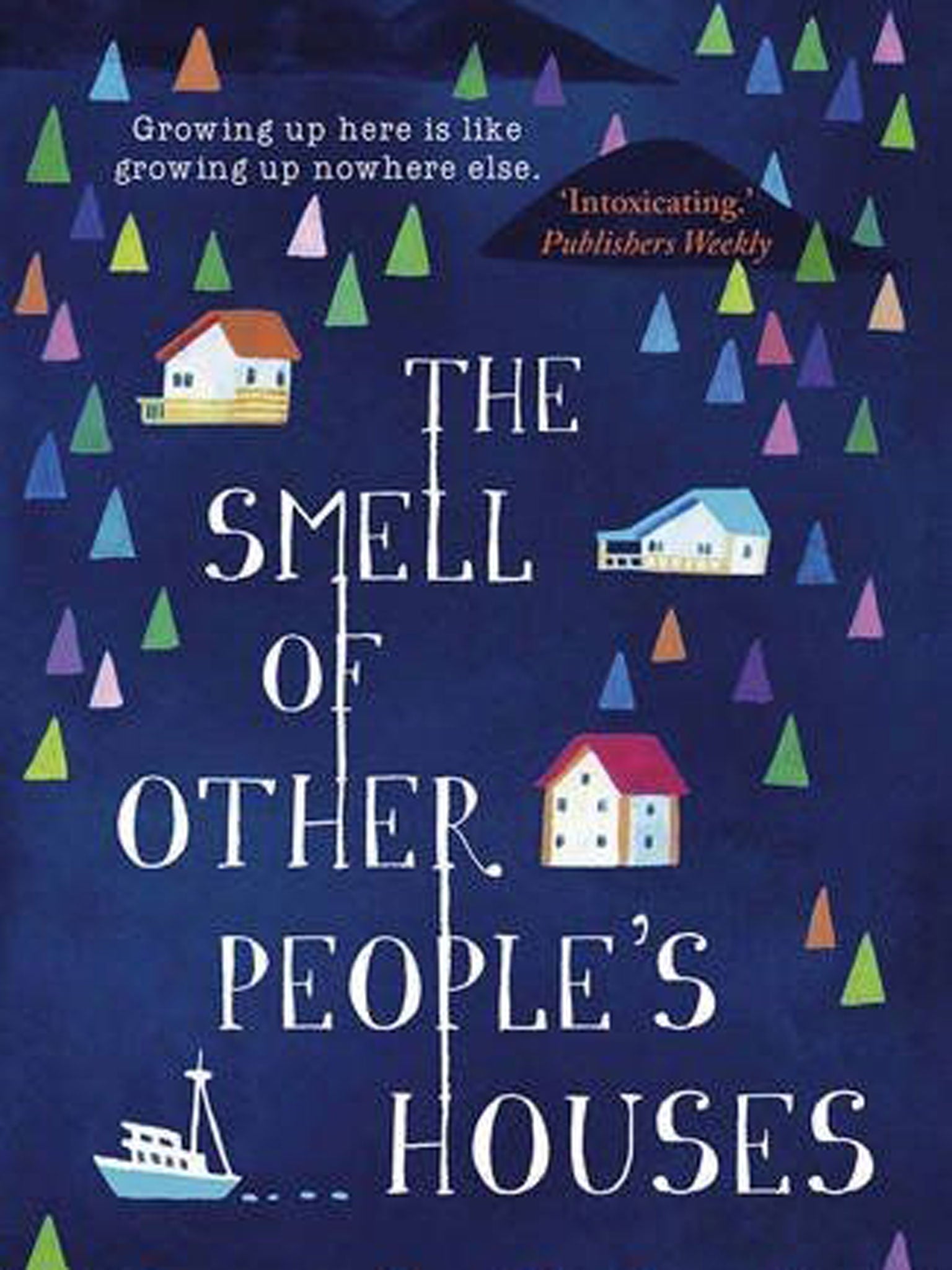
'The Smell of Other People's Houses' by Bonnie-Sue Hitchcock

Image result for the smell of other people's houses uk cover
'I remember my dad saying that sometimes you can be inserted into another person's life just by witnessing something you were never really supposed to be a part of.'


'I can't stop remembering the ways things were back then.'
The novel starts with a prologue narrated by Ruth, who's looking back at 1958-1963: before her father died, before her mother went AWOL, before Ruth and her sister Lily were sent to live with their strict Catholic grandmother.


Ruth is only one of the four narrators we follow, and we follow her as she loses her virginity to her boyfriend, Ray, who dumps her for the new girl just before she finds out she's pregnant.
Dora is living with her best friend's family, escaping from her abusive, alcoholic father and the mother who failed to defend her.
Alyce wants to be a dancer, but she's going to miss the auditions for college because she's spending the summer helping her father and uncle on their fishing boat.
Hank and his brothers, Sam and Jack, are stowing away on a ferry which they hope will take them to a place far, far away from their mother and her new boyfriend. It all seems to be going swimmingly, until Sam disappears...


There is nothing bad about this book. I was emotionally invested in all four of the narrators, and I didn't get bored during any of their viewpoints. I liked the fact that it switched between them fairly regularly because I wanted to know what was going on with the other three character's story lines, but I also wanted to stay with each of them. Within a couple of chapters they all felt like friends, and I would have happily read the entire novel following any of them.
I've never read a book set in Alaska before, and I adored the attention to detail as Bonnie-Sue built the landscape and the scenery from the ground up. The description of the flood that the characters experienced when they were younger was particularly artful: I live in an area of high ground so I've never lived through a flood, but it evoked all of my senses (particularly the sense of smell: my nose was wrinkling up just thinking about the musty, mildewed dampness!). I also adored the references to the leaves on the trees, as Alaska is stereotypically described as a barren landscape with nothing but snow - it's nice to get a feel of the place from someone who actually knows it. It's an #ownvoices novel, as Bonnie-Sue herself is from Alaska and grew up around the time that the book is set: in the questions and answers section at the end of my edition she shared that she'd borrowed some of the stories from people she knew growing up, and it's obvious because it's utterly realistic.
Normally I would give spoilers and go into what happened to each of the characters, but the charm of this book is seeing how it all develops so I'm not going to do that. Just know that all of the stories are intertwined, and even if someone seems like a background character at first you should keep them in mind. It's breathtakingly beautiful, and I find it hard to believe that this is a debut novel. Bonnie-Sue Hitchcock was born to write, and I need her to release another book NOW.


I only wanted to read this book because it's not often I encounter a character with the same name as me. I've actually only met one before, and they were a background character, so to actually meet an Alyce with a point of view perspective was awesome.
Would I have picked up this book if it hadn't been for that? I don't know. But I am SO GLAD that Bonnie-Sue decided to use my name on one of her characters, because it's helped my discover one of my favourite books of all time.
I borrowed this from the library, but I'm definitely going to have to purchase my own copy. I read it in one sitting because I was that hooked by the writing style and the plot, but I wish I'd savoured it and really enjoyed every word. I've only just returned it, but I already want to read it again!

Tuesday, 9 May 2017

'The Dry' by Jane Harper - SPOILER REVIEW

Way back in January, I took part in 'The Dry' blog tour, and I loved it so much that I told you I was going to be posting a spoiler-filled review.
Well, it might have taken me nearly four months, but HERE IT IS! This book has still been playing on my mind, but I haven't had the time to review it more thoroughly: hopefully this post is worth the wait...

Image result for the dry by jane harper

'The Dry' tells two stories at once. 
The primary focus is the deaths of Luke, Karen and Billy Hadler, who appear to have been wiped out by Luke in a murder-suicide. The Kiewarra townsfolk claim that Luke had a violent temper and that, combined with the fact that his farm was failing due to a two-year drought, caused him to kill the people closest to him from sheer desperation.
Federal Police Investigator Aaron Falk was best friends with Luke Hadler when they were younger, and he can't believe that the man he knew could do something that horrendous. But once upon a time Aaron was suspected of being involved in the death of their mutual friend Ellie Deacon, and looking back at the fact that Luke gave him an alibi Aaron starts to wonder if he was saving his own skin all along.
When Aaron gets back to Kiewarra, he reunites with Gretchen, the fourth member of their friendship group and the woman who used to be Luke's girlfriend. She also can't accept that Luke could have been responsible for killing his family: he wasn't that kind of person. Aaron and Gretchen grow close, but he has his suspicions.
Why did her and Luke break up? And just who is the father of her little boy?

If you haven't read 'The Dry' look away now! If you couldn't guess by the disclaimer in the title, it's about to get spoilery up in 'ere...

I was 100,000,000,000% convinced that Gretchen was the killer.
EVERY SINGLE HINT pointed in her direction. The way she focused on Aaron as soon as he gets back to town with an interest that made me instantly suspicious. Her dismissive attitude towards conversations about her relationship with Luke, and the murmurs around town that he was having trouble with a woman. The mystery of who fathered her child.
Then there was the fact that she had a rivalry with Ellie back when they were teenagers, and was the only person not suspected at the time...
From the moment we met Gretchen, I KNEW it was her. It was disappointing, because it was so obvious and totally cliched.
So imagine my surprise when I WAS WRONG! I'm NEVER wrong, so it was a huge shock and a brilliant twist that made me look at the book in a whole new light.
Everyone in town assumed that the murders were either committed by Luke or happened because of him: he was known for his regular arguments with the Deacons - tensions still simmering following Ellie's death - and was widely known to have issues with his temper.
That's what makes it even more shocking when you discover the family was destroyed because of Karen. She's described in such an inoffensive manner - always playing by the rules, nice and friendly to everyone - that it's difficult to comprehend she could have gotten on someone's bad side, but it happens BECAUSE she always plays by the rules.
She worked as a receptionist at the school, and she discovered that her gambling-addict of a boss had been stealing money. She couldn't let it slide, and after she'd spoken to him - notifying him of the fact that she knew what he's done - she told Luke who suggested contacting Aaron, who deals with finances in his role as police officer. Aaron didn't answer, but Whitlam knew Karen wouldn't be able to keep his activities to herself for long, so he had no choice but to kill her and Luke (and Billy, who stayed home ill, missing a playdate that Whitlam had orchestrated to get him out of the firing line).
The conclusion is climactic as HECK, with the cornered Whitlam threatening to start a bushfire to escape justice, putting the lives of every member of Kiewarra in danger - including his child and his wife. It's a brilliant exploration of the way desperation sends you extreme lengths, and how people can justify the most disgusting of acts to save their own skin.

If you're looking to read a thriller that not only keeps you gripped, but explores the human condition and has a realistically depicted setting, 'The Dry' is perfect for you.

I hope you enjoyed this spoiler-filled review. Do you prefer to get spoilers, or would you rather find out what happened for yourself?

Monday, 8 May 2017

'Orangeboy' by Patrice Lawrence

Image result for orangeboy patrice lawrence
*This review will contain spoilers!*
'I laughed. "How many brain surgeons do you know from Hackney?"
She poked my back. "There may be some. Or you could be the first. You could really do that, Marlon." 


'Man, I couldn't stop looking at her. When I closed my eyes, I still saw her. Her hair was thick and blonde, and a curl looped over her ear to her shoulder. She wore black mascara and green eyeliner and her lips looked skin and sticky. 
Sonya Wilson was right there next to me and it made my brain buzz.'
Being on his first date with the most popular girl in school wasn't the only thing making Marlon Isaac Asimov Sunday's brain buzz - the quarter of an ecstasy tablet she'd given him was having an effect, too.

When Sonya, the gorgeous new girl, asks Marlon on a date, he can't believe his luck. After all of the trouble with his brother Andre, Marlon's been keeping his head down and focusing on his studies: he's not one of the tough kids leading the school. But it's paid off, and now he has a girl like Sonya on his arm.
They visit the local funfair, where Sonya offers him the ecstasy. He knows all of the cool kids would accept her offer, so he agrees - she's taking a quarter too, so it's not like he's doing it by himself - and they go on a couple of rides. Marlon spots some kids hassling Sonya, but when he asks her about it she dismisses him and pulls him towards the ghost train. 
Sonya doesn't make it to the other side of the ride. When they get to the other side, Marlon notices that she's not breathing: she died during their journey. 
Marlon finds it hard to cope with her death. Minutes earlier he'd been imagining their future together
'If we have kids together, what will their hair look like?
Kids? I haven't even kissed her yet.' 
and now Sonya is dead and Marlon's getting quizzed by the police, because she asked him to look after her stash of ecstasy pills for her before they boarded the train. 
The police aren't surprised to see another Sunday boy in their station. Andre - more commonly known as Booka - was heavily involved in the local gang scene until a car accident which left him brain damaged and his best friend dead. Marlon protests his innocence, but the police were certain he was guilty the second they discovered he was Andre's brother.
Marlon's mother is distraught. She doesn't want to be going through this with another son, so as soon as they get home she tells him to keep his act straight and to pretend he never met Sonya. He's haunted by her - the swish of her hair, her scent, the mustard-coated hotdog that was her last meal - and he can't believe she might have died because of the ecstasy: that he could have died, too, if he'd been unlucky.
Marlon feels as though his guilt will evaporate if he meets Sonya's grandmother, her primary carer. That way he can apologise for his involvement and try to explain the situation, so they won't think he was only with her to force her to take drugs.
Sonya's grandmother already knew about Sonya's involvement in drugs, so she isn't surprised by what Marlon tells her. She gives him Sonya's Blackberry - a different phone than the one Marlon knew she had - and by doing so sends his life spiraling out of control as he gets thrown in the deep end. 
Marlon's right in the middle of a war Andre started, and he's going to have to finish it for him.


I found this book quite slow, and it became a chore to get through. It's such a shame, because I was excited about this debut long before it hit the shelves... I didn't read it at the best time and that's my fault, not Patrice's! 
That being said, I'm glad working class YA is becoming more prominent, especially as it's not being used as 'poverty porn'. Marlon's mum works in a library and has a well-off boyfriend, they have a lovely house: Andre's involvement in the gangs didn't happen because of desperation. It was a lifestyle choice. 
After reading 'Liccle Bit' by Alex Wheatle a couple of weeks ago, I said I loved the way that he compared the relationship between gang members and family members, and how the two are so closely linked. Patrice Lawrence also plays with this idea: D-Ice, who targets Marlon, is the brother of Tayz, the man who ran Andre off the road. D-Ice feels a misguided loyalty to his brother and resolves to tear Marlon's family apart - it's a harrowing look at the way grief affects your sense, and how revenge is never the answer
I particularly appreciated the inclusion of Andre's brain injury, which is extremely effective. We're told he used to be top dog, the man everyone bowed down to, the kind who had a gun just in case. But because he wasn't wearing a seatbelt when he crashed, he now struggles with his memory and has episodes of uncontrollable rage, which is why he's confined to a care home. To see the contrast between who we're told he was and how he is now is heartbreaking, and hammers home the importance of road safety - it's not done in a preachy way, but it's not often that authors draw your attention to the character buckling their seatbelt, and it's a small but effective way of reminding readers to do the same
However, I struggled with 'Orangeboy' because it felt unfinished. The ending was extremely rushed, and because the pacing throughout the first three quarters was so slow the sudden increase in speed gave me whiplash and had me rereading the page after every other paragraph. Some things remained unexplored and unexplained, which was frustrating: this would have been a far more effective standalone if everything had been wrapped up towards the conclusion, but I still have a lot of questions that haven't been answered. 
Overall, this is an effective and interesting debut, but based off of the rave reviews I've seen I was expecting a little bit more. 

It's probably my fault that I didn't like this book as much as I was expecting to. I tried to speed read it in time for the #SundayYA book club chat last month (because I'd been slacking off even though I knew I had to read it) and that made me begrudging towards it. 
Here's a lesson, kids: don't force yourself to read something you don't want to. 
I really like Patrice's voice and the fact that she had no qualms about focusing on a very harrowing topic. I definitely like this more for reading it quite close to Alex Wheatle's Crongton series: despite the fact that series has a far more humorous tone, the unwilling involvement in gang war is a compelling narrative. 
I'm looking forward to reading more from Patrice in the future (and hopefully giving this one a reread when I'm in a better place!). 

Tuesday, 2 May 2017

'The Yellow Room' by Jess Vallance

Image result for the yellow room vallance
*This review will contain spoilers!*


'It's about half seven on Tuesday morning and it's freezing in my bedroom so I'm doing my usual trick of gathering all of my uniform together in one quick sweep, dragging it into bed with me and getting dressed completely under the duvet.'
I think everyone's going to relate to this first sentence: no one likes getting out of bed when it's cold!


Anna is on her way to school when the postman gives her a letter that changes her life. It's from a woman called Edie Southwood, and she's writing to inform Anna that her absent father is dead.
Edie, her father's long-term girlfriend, is utterly distraught by his passing. She asks Anna if they can meet, and against the wishes of her best friends George and Sienna, Anna agrees. If meeting her will help this woman's guilt, it's the least she can do.
Edie brings Anna a necklace that her father wanted her to have, and Anna wastes no time before asking about her father: it's too late to meet him, but it's not too late to get to know him. 
After a few hours in the cafe, Anna quickly comes to the realisation that she actually likes Edie. Her mother is a university professor who has no time for her: even though Edie is naive and innocent, her friendship is the closest Anna has to a parental bond. After a few trips to the seaside Edie decides she's going to relocate there and starts looking for flats, and Anna's happy to help. She's just grateful that her father's death didn't ruin Edie's chance for happiness.
But Anna's mother isn't the only problem in her life. She's being blackmailed by Leon Jakes-Field, a boy who goes to her school, because he saw her push a child she was babysitting (in self-defence, nonetheless). Leon thinks he's hot shit because his mum is a best-selling author, and he's certain he's going to follow in her footsteps. Anna hates him, but she can't let him know that or he'll send her life crashing down around her.
Anna confides in Evie, and the shared knowledge of her secret brings them closer together. She can't tell George or Sienna about Leon or the fact that she's still seeing Evie, and the secrets drive a wedge between their little trio. 
Then Anna gets a phone call, and it seems her dad might not be dead after all. So who is Edie Southwood, and why did she lie?


This is the YA answer to 'The Collector' by John Fowles. As that's one of my favourite classics of all time, you'd be betting correctly if you said I bloody loved this book.
It's psychological as shit
First of all you've got the blackmail from Leon, an intensely creepy asshole who manipulates Anna and gets so uncomfortably far into her personal space that you'll find yourself cringing in response while you read. 
Then you've got the relationship between Anna and her mother, which is a fascinating but heartbreakingly realistic depiction of a parent/child relationship. Not every family unit is a happy one, and that's not often represented in YA - often teenage characters have parents that they can turn to, confide in and rely on, but in real life that isn't always the case. 
Last but not least there's Edie, who tries to do everything right but goes about it in completely the wrong way. Edie genuinely thinks she's helping Anna - a fact which makes her barricading her in her spare room all the harder to understand. It's utterly chilling to read, even if it does feel a little rushed: it wouldn't have been good if there had been gratuitous, unnecessary scenes of Anna trapped in the yellow room, but it would have added to the significance of the setting that gives us our title. 
The only reason I didn't give this book five stars is because Anna never has to deal with her problems herself. Edie talks to Leon's mum and she deals with her son, forcing him to delete his so-called 'evidence' before shipping him off to Africa to work for his uncle. Anna's relationship with her mother is only changed when she saves her from Edie's yellow room, and Anna doesn't have to plot her escape because her parents and the police turn up to save the day. On the one hand, it's realistic - not many 16-year-olds have to deal with their problems entirely independently - but it's disappointing
That being said, I was so happy with how Jess finished the story. Edie gets the help that she needs and Anna isn't angry with her, which was a relief: sometimes people act out of character because of mental illness, and you can't hold what they do against them. Anna and her mother decide they're going to work on their problems, while Anna's dad leaves town again - it's not a straightforward happily ever after, because life rarely is! Being someone who only has one parent, I was worried that Anna's dad was going to rock up and be seen as the knight in shining armour: I could have cheered with happiness when Anna and her mum teamed up to show him they didn't think he was their saviour. 
This is an entirely satisfying standalone


I wish I'd read this book earlier. I'm definitely going to give Jess Vallance's debut novel, 'Birdy', a try: not many young adult authors are attempting to write contemporary psychological dramas, so this book was a refreshing change from the status quo. 

Monday, 1 May 2017

'Crongton Knights' (South Crongton Trilogy #2) by Alex Wheatle

Image result for crongton knights wheatle goodreads
*This review will contain spoilers!*
'How long had this fight been going on? It felt like for ever. I mean, North and South Crong were just two grimy council estates where most fams had a gas card, an electric key and they didn't want their kids to end up in the biscuit factory, stacking shelves in the supermarket or selling extra-large colas down the bowling alley. So how were they so different?'


'My mum told me I was named after her Scottish granddad, Danny McKay.'
Instead of being a direct continuation, 'Crongton Knights' is a companion novel to 'Liccle Bit'. Lemar, Jonah and Venetia are still a huge part of the story, but it's great to get to know McKay a little better!


When Venetia breaks up with her older boyfriend Sergio, she's devastated. Not because of the split, but because he stole her phone, which had intimate photos of her on it - photos that he took on his phone, without her permission, and sent to her.
Bit comes up with a plan: the gang can roll up to Sergio's place, ask him for Venetia's phone back, and if he refuses then they'll take it from him... Forcibly. Then they'll take his phone, too, just to be certain that all of the evidence is deleted.
McKay and Jonah are both apprehensive. Sergio lives in Notre Dame, an estate the other side of North Crong, and with Manjaro still on the run tension between the gangs is higher than ever. Just setting foot outside South Crong is seen as asking for a beating.
Bit's always been a good friend to McKay. He supported him when his mother died by letting him live with him for a few days, so he owes his bruv. McKay decides to overcome his nerves and take part in the mission.
After that it doesn't take much to persuade Jonah: he doesn't want to be the odd one out, and new girl Saira is going along - he's sure that his bravery will help him score with her.
But McKay has a lot going on at home. Since his mother's death, his brother Nesta has been struggling to control his temper, and after some members of the North Crong gang attempt to steal his bicycle he puts one of them in hospital. Then there are the debt collectors banging on the door every morning, despite the fact that his dad is working more overtime than seems physically possible...


I can't fault this novel.
'Liccle Bit' moved at a slow pace, but 'Crongton Knights' is a modern take on the traditional quest plot and I absolutely loved every page. McKay refers to houses as castles and doors as drawbridges, which means the bus must be the trusty steed that they ride into battle: a humorous way of looking at a stupidly dangerous task.
The events take place over just 48 hours, so there isn't any downtime. It's impossible to put this book down, and you can feel your heart racing as the gang find themselves in countless sticky situations on their journey to and from Notre Dame. I'm used to feeling this fear while reading fantasy or science fiction novels, so to experience it in a contemporary novel - all be it a contemporary set in a fake location - really drives home the terror that residents of gang-filled areas must feel on a daily basis.
The relationship between family and gang is further explored, which I'd been hoping for after enjoying that aspect in 'Liccle Bit'. Nesta isn't part of any gang - he's a bit of a loner - but his actions get McKay dragged into a life-threatening situation.
"This all started with me... Sorry for getting you bruvs caught up in this macho drama."
"You were only defending yourself," I said.
"Yeah." Nesta nodded. "But look what it led to. Sorry."
Alex Wheatle's a genius at showing how everyone is involved in the gang in some way, and mostly not by choice. His writing makes you reevaluate the way you feel about teenagers involved in real life gangs, and that empathy is important: it's not fair to completely ostracise young people without understanding their motives, because they may be defending themselves or their families. This is most apparent in Venetia, who has no choice but to act in a situation she never should have been placed in.
This story is the definition of gripping. If you want to read a short book with well-crafted, realistic characters, I recommend nothing more highly than 'Crongton Knights'.


I can't wait to read 'Straight Outta Crongton', even though I'm assuming it'll be following another new resident of South Crong. I wouldn't be surprised if Alex Wheatle won the YA Book Prize - this series deserves appreciation, and I want to hear more people talking about it sooner rather than later.

Saturday, 29 April 2017

'Liccle Bit' (South Crongton Trilogy #1) by Alex Wheatle

Image result for liccle bit
*This review will contain spoilers!*
'I didn't want to be known as a snitch - snitches in Crongton had the same lifespan as a choc ice on a barbecue.'


'It all started two months ago. A normal day at school, if you can call going to my school normal.'


War is raging between North and South Crongton. Members of both gangs are getting deleted weekly, making the tension in the area unbearable.
Liccle Bit - Lemar - isn't a member of the South Crong crew. His mum would kill him if he got involved with Manjaro, the leader of the gang and his nephew's father. He's only fourteen and even though he's a very talented artist his entire family are eager for him to do well at school, just in case his art career doesn't pan out. 
But Lemar's life takes a turn for the unexpected when Manjaro singles him out. He wonders if he's trying to get closer to Jerome, because Lemar's sister Elaine doesn't want her violent, cheating ex anywhere near their son. He does all that he can to avoid Manjaro, but when the toughest man in South Crong asks you for a favour, it's impossible to say no... 


'Liccle Bit' isn't the kind of book I would normally try. I only picked it up because the sequel, 'Crongton Knights', is on the shortlist for the YA Book Prize and I'm reading every book in the running for the award.
This is a realistic representation of the working class, but it does verge on stereotypical at times. There's a vast spectrum of difference within the working class, and this is a very specific area to focus upon, but Alex Wheatle's focus doesn't waver.
Despite the fact that Lemar isn't directly involved with the gangs at the start of the novel, they're still a prominent aspect of his life. His family are always going to be intrinsically linked to them because of Jerome, which nicely demonstrated the way that the choices of your family can inadvertently impact your life. It also shows the problem with living in a violent area: it permeates everything, meaning that even if you aren't part of it, you're made a part of it just because of your postcode.
The exploration of why people get involved with gangs is fascinating. Manjaro justifies selling drugs and being violent, thinking of his crew as a kind of family. He has an all for one, one for all attitude
"Every loss is our loss and every profit is our profit."
and uses his ill-gotten gains to help his 'employees' afford higher education, even teaching them maths and English while they work for him. Lemar finds this out when he stays at Manjaro's house one night after an argument with his sister. When his family aren't there for him, Manjaro is, which explains why people feel loyalty to gangs: they may feel as though they have no one else looking after them, and no one wants to be alone.
The comparisons between the gang are family are laced throughout the book, and I'm looking forward to seeing if that discussion continues in the future installments. Lemar's parents are divorced, and because his father has a new wife and daughter and his mother doesn't like hearing about them, they also feel like two warring gangs.
Alex Wheatle is a genius when it comes to using informal language. He incorporates the lingo perfectly, bringing the characters to life, even if it is a little exhausting to get your head around at the beginning. The banter between Lemar and his best friends, McKay and Jonah, had me laughing out loud at multiple points
"Man! If I had ten minutes with Venetia," Jonah remarked.
"If you had ten minutes with her, you wouldn't know what to do, bruv," laughed McKay.
and it was nice to see such a great friendship between the three. They might mock and laugh at each other, but they support each other through thick and thin, and that's what's important. I also enjoyed Lemar's friendship with Venetia, though I'm not-so-secretly hoping it'll develop into more...


This is proof that you should always read outside your comfort zone. My assumptions were smashed to the ground, and I'm now looking forward to reading both 'Crongton Knights' and 'Straight Outta Crongton', the last book in the trilogy which was released earlier this month. Knowing that 'Crongton Knights' won the 2016 Guardian Children's prize, I'm expecting it to get better from here. 

Wednesday, 26 April 2017

'Margot & Me' by Juno Dawson

Image result for margot and me juno dawson
*This review will contain spoilers!*
"Over time, we teach ourselves to stop feeling. It's the only way we survive." She taps her breastbone with her index finger. "It all becomes scar tissue and gristle. It's such a shame. So just let yourself feel it, truthfully and wholly, because one day you won't any more."
"But I don't want to feel like this. It really hurts." My voice crackles.
"It's better than nothing at all. Believe you me."


"The problem with young people today," Margot said about an hour ago, "is that, from birth, every single one has been told that they are somehow special."
Well, you can't argue with that assertion. Margot's not a fan of special snowflake syndrome.


Fliss and her mum have gone to live in Wales with her grandmother, Margot, for six months, while Janet recovers from ovarian cancer. Fliss is unimpressed: she misses her friends and her sort-of-boyfriend Xander, and she's not a fan of the dirty farm or the aloof and unemotional Margot.
Things change when Fliss finds Margot's diary in a dusty old chest in the attic. Fliss loves sixteen-year-old Margot, and can't wait to see how her story got her to where she is today: she was in love with a man who wasn't Fliss's grandfather, and Fliss can't understand how their seemingly perfect relationship could have failed.


One thing severely hampered my enjoyment of this novel: it was riddled with errors. I always try to refrain from judging books too harshly for mistakes, but that's because I'm normally reading advance reader's copies and those aren't final. This one was.
I've left it a few days to write this review, because I felt very conflicted. I enjoyed the letters that told Margot's story, but Fliss didn't really have her own plot. Everything that happened to her was because of other people: she had a crush on the school librarian which she only got past when he rejected her; she only matured because of her mother's illness; her respect for Margot only developed because she discovered her diary. I can't think of one aspect of her character that she developed herself.
I was only interested in Margot's diary, and at multiple points I actually considered jumping to the next one. Fliss's reaction didn't add anything to the story for me, and it explains why this novel is so much longer than Juno's previous releases: there was lots of unnecessary waffle. If I hadn't been looking after my friend's cat with no access to the internet, it would have taken me a lot longer to crawl through this book. Similarly, if this story had just focused on Margot and being an evacuated teenager, it would have been five stars. Juno really brings the era to life, and the tense atmosphere of a country at war is beautifully crafted.
But as soon as it gets to the present plot, everything falls apart. I couldn't understand why it was set in the late 90's. It didn't add anything to the plot, and the stereotypical references got old very fast. I can only imagine this was chosen to allow Fliss to be the same age as Margot in her diary entries, but that's a shallow reason. It doesn't feel as though Juno had any love for the decade, because at multiple points it feels like it could be set today - it's not authentic.
So many aspects don't make sense looking back. What was the point in Peanut the piglet? Yes, he caused more conflict between Margot and Fliss, but then he just disappeared into the background. What was the point of that weird chapter where Fliss did her make-up and then smashed her lipstick in the mirror? I didn't sit comfortably with any other part of the story and it was another thing that did nothing to the plot. That's why the synopsis I've written above is so short - no other aspect of the story seems relevant enough to mention.
This book was just a mess. On top of everything else, it's forgettable: I've been reading back through my notes, and while I felt all warm and fuzzy at the time and was certain that it deserved a high rating, I have no way of justifying that anymore. This is another reason I've been putting off this review, because I hoped that my love for it would come back... I'm just confused about how my feelings have changed so quickly. It might have been because I loved 'All of the Above' and just assumed I was going to love this one too, but that's another reason I held off on reviewing it.

It's not Juno's fault that the copy edit wasn't up to scratch, and if I'd been reviewing this as an ARC I might have been able to overlook it, but as a finished edition I couldn't let it go. If that had been the only problem, it wouldn't have had too much of an impact on my enjoyment, but unfortunately there was far more bad than good in this book. 
I decided to give it a four star rating as soon as I finished it - it's very emotional, and my knee-jerk reaction was that it was almost perfect. 
Sadly, with a couple of days of reflection I've had to drop it down to two stars: I see hardly any positive aspects in hindsight. Disappointing, but necessary. I can't award a book a high rating just because I really loved the author's previous work.

Saturday, 15 April 2017

BLOG TOUR: 'True North' (True Born Trilogy #2) by L.E. Sterling - SPOILER FREE REVIEW


I really enjoyed 'True Born' and have been dying to get my hands on the sequel, so I was over the moon when I was invited to participate in the 'True North' blog tour (after taking part in the cover reveal too - so much excitement!). I need to say a huge thank you to Entangled Teen and YA Reads Blog Tours for allowing me to be a part of both of these wonderful opportunities.

Abandoned by her family in Plague-ridden Dominion City, eighteen-year-old Lucy Fox has no choice but to rely upon the kindness of the True Borns, a renegade group of genetically enhanced humans, to save her twin sister, Margot. But Nolan Storm, their mysterious leader, has his own agenda. When Storm backtracks on his promise to rescue Margot, Lucy takes her fate into her own hands and sets off for Russia with her True Born bodyguard and maybe-something-more, the lethal yet beautiful Jared Price. In Russie, there's been whispered rumors of Plague Cure.
While Lucy fights her magnetic attraction to Jared, anxious that his loyalty to Storm will hurt her chances of finding her sister, they quickly discover that not all is as it appears... and discovering the secrets contained in the Fox sisters' blood before they wind up dead is just the beginning.
As they say in Dominion, sometimes it's not you... it's your DNA.  
I'm not going to spoil any of the events of 'True North', but if you haven't read 'True Born' you need to look away now!


'Sometimes flesh and bone are as inexplicable as magic.'


At the end of 'True Born', Margot and Lucy Fox were separated. Margot was taken to Russia by their parents, and Lucy was left in Dominion with the True Borns.
When 'True North' starts, Lucy is desperate to be reunited with her sister. She's been helping Nolan Storm, the leader of the True Borns and her stand-in guardian, for the last four months, gathering intel using the charismatic skills she honed as the daughter of one of the most important men in the Upper Circle. Nolan promised her that he'd help her find her sister, but Dominion is on the brink of a civil war so he won't be leaving any time soon.
Lucy takes matters into her own hands. She asks one of the members of a kid gang for help, but when things turn south she's saved by the mysterious Alistair. He agrees to help her find Margot and gets them passage on a cruise liner heading to Europe. Lucy thinks she sneaks away from the True Borns undetected, but within a day of the ship setting sail she realises Jared - her personal bodyguard turned sort of boyfriend - worked out where she was going and is also on board the ship.
As Lucy sails across the ocean, she meets a member of the Gilt: the exclusive group who are even higher than the Upper Circle. It's not until he starts talking about a potential miracle cure rumoured to be found in Russia that Lucy begins to wonder if she's found a map straight to her sister...


'True North' is far slower than 'True Born', so it took me quite a while to read it. Whereas I flew through the first book, I found myself feeling disinclined towards picking this one up, which is a shame: it's very well written and I still love the world L.E. Sterling has crafted, but I was forcing myself through it and I think that's why I didn't like it as much.
I was planning on rereading the first book before I jumped into this one, but I didn't have time. Despite the fact that L.E. Sterling does a great job recapping the events of book one, I still found it hard to get my head back into the world of Dominion, and I struggled to reconnect with the characters who I had previously loved.
That being said, this installment is definitely worth a read. It moves the plot forward exponentially, revealing the answers to questions that I'd had since the first page of 'True Born', but it makes you ask even more - it's impossible to read this book and not want to finish the series.
However, it suffers from middle book slump. Despite the fact that there were a few reveals throughout, it's seems more focused on setting up what I'm sure is going to be an explosive finale. I'm keeping my fingers crossed that the third book in the trilogy will pick up the pace and bring back the excitement that thrummed through me with every page of the series opener.
When the third book is released I'm definitely going to reread the two previous novels: this series is perfect for binge-reading. Only four months pass between 'True Born' and 'True North', so it's a very short time between installments! Despite the fact that I could hardly remember what had happened, it didn't feel like long since I'd last walked the Plague-ridden streets of Dominion with Lucy and Jared.
Oh, and talking of Lucy and Jared, if you're a fan of a passionate, tension-filled kissing scene, you're going to love this.


I'm still excited for the third book in the True Born Trilogy. This installment didn't excite me as much as the first novel but I still enjoyed it, and I'm looking forward to seeing how everything gets resolved. I have so many unanswered questions still floating through my head!


About the author:

I was a voracious devotee of sci-fi and fantasy novels all through my
childhood, so I suppose it doesn't come as much of a shock that I've
returned to the genre with a vengeance.
For a while I turned my back on the genre in favour of 'high-brow' literary texts. Ironically, it was my doctoral degree that saw me circling back. There's something about the way postmodern literature plays with the arcane that had me utterly fascinated, and it wasn't long until I fell headlong back into my old ways and haven't looked back since.
My first novel, which isn't in the Urban Fantasy or Fantasy genres, isn't high literature, mind you, even if it tangles with some serious statements about politics and the way our western world runs. My editor described it as something between Charles Dickens and 'The Catcher in the Rye'. Serious Fun, in other words.
My second novel, 'Pluto's Gate', is where I've come home to myself: it's a contemporary retelling of the Demeter-Persephone-Pluto story from Greek mythology. Folded into the mix is a Shaman-in-training, a magical book, Underworld Gods, a world covered in ice, a three-headed dog, and one lousy ex-boyfriend. 

But I'll tell you this much: I believe in the power of words and stories to
transform our inner worlds. Whether the characters be vampires or
vagabonds, a good narrative sucker punches so-called reality anyhow. 

You can find L.E. Sterling on her websiteGoodreads and Twitter. 

If you've already read 'True Born' and can't wait to get your hands on 'True North', sample the first six chapters or purchase a copy here . If you haven't read 'True Born' yet, what are you waiting for?